
Why Our Mornings Start With Running
Seacoast Waldorf School elementary and middle school kids on a morning run
Flowers in the foreground. Children playing in the sandboxes and climbing among the trees. Then, right on schedule, a group of elementary and middle school students sets off on their morning run around the school’s ring road, passing the chicken coop and friends at play along the way.
It happens nearly every day at Seacoast Waldorf School, whenever the weather allows. Before the first lesson begins, movement helps set the rhythm for the day.
Waldorf education has trusted this rhythm for a hundred years: move the body first, then ask the mind to sit and focus. It turns out the research backs this up.
What the research actually shows
A 2018 meta-analysis in the Journal of Science and Medicine in Sport pulled together the results of dozens of studies on physical activity and children ages 6 to 12. A single bout of movement produced a real, measurable improvement in attention. Programs that built movement into the routine day after day showed even larger gains, both in attention and in executive function, the mental skills kids use to focus, switch between tasks, and hold instructions in mind.
That second part matters as much as the first. Executive function is what lets a child sit down after recess and actually start the math lesson instead of staring at the page for five minutes first.
A separate study looked specifically at morning movement. Researchers ran a short exercise program during the morning break at school and found it improved children's attention and concentration, along with their basic arithmetic ability, the very skills a child needs the moment they open a lesson book.
Not every study agrees on how much movement translates into better test scores. Academic performance is a harder thing to measure than attention, and some research is more mixed on that specific link. But the finding that holds up again and again, across a wide range of studies, is that moving before a task improves a child's ability to focus and self-regulate once they sit down for it.
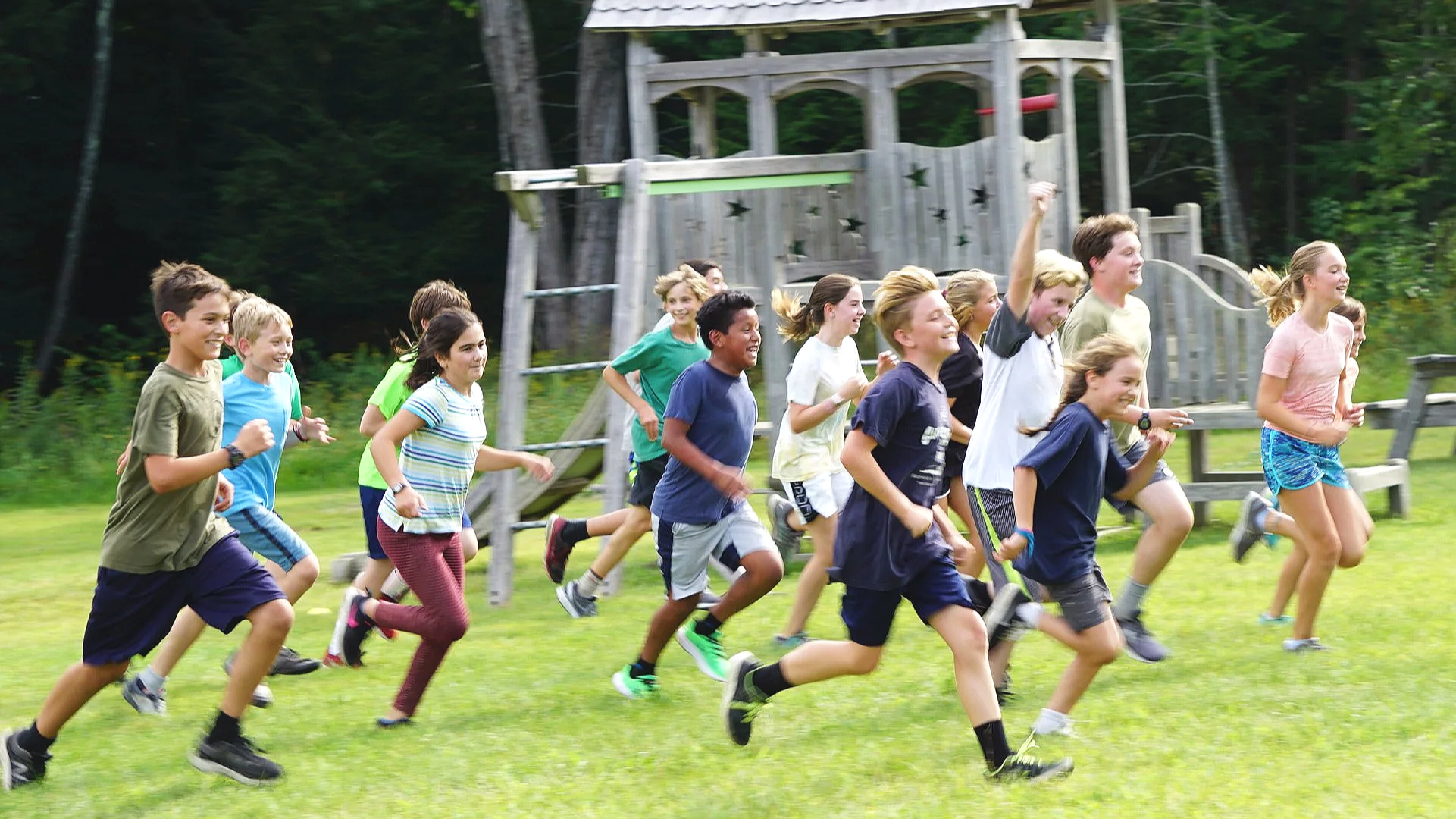
Nearly every morning, weather permitting, our grades 1-8 students begin the day running the ring road, building strong bodies, clear minds, and a joyful readiness to learn.
What this looks like at Seacoast Waldorf School
None of this needed a study to convince us. Waldorf educators have built movement into the start of the school day for generations, guided by a simple observation: a child who has run, breathed hard, and felt their body in space arrives at their desk more ready to learn than a child who hasn't.
Watching our elementary students run, laughing, out of breath, wide awake, it's easy to see why.
Sources: De Greeff, J.W., Bosker, R.J., Oosterlaan, J., Visscher, C., & Hartmann, E. (2018). Effects of physical activity on executive functions, attention and academic performance in preadolescent children: A meta-analysis. Journal of Science and Medicine in Sport. Additional research on morning physical activity and cognitive function via Mind, Brain, and Education and related peer-reviewed journals.
