
What’s for Lunch? Healthy Preschool & Kindergarten Snacks & Meals in Eliot, Maine
When you’re choosing a preschool or kindergarten, mealtimes matter. You want your child to have nourishing food and enough time to enjoy it, with a caring adult nearby to help. Having lunch and snacks taken care of (less to purchase, plan and pack!) makes your mornings easier, too.
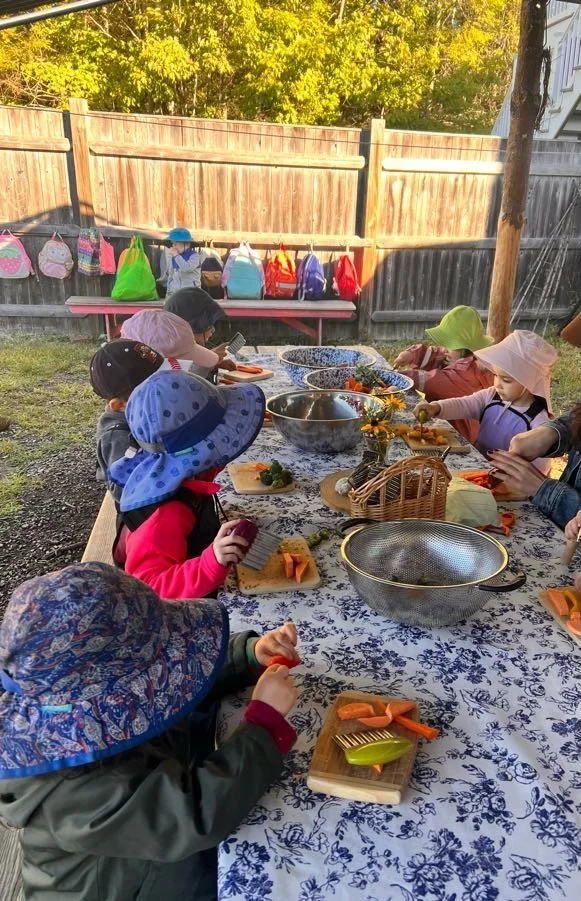
At Seacoast Waldorf School in Eliot, Maine, wholesome meals and snacks are provided and are an important part of our Nursery, Preschool and Kindergarten day. Food is prepared right in the classrooms, often with the children’s help, and enjoyed together around a carefully set table.
For parents, that means one less daily task: no lunches or snacks to pack and the knowledge that their children will be getting wholesome nourishing food (often things that their kiddos might not try otherwise, but are willing to try in the company of friends!) For children, it means warm meals and the satisfaction of helping make something everyone will enjoy.
Fresh Snacks and Warm Lunches
Our classroom menu features familiar ingredients prepared simply. Snacks may include fresh fruit, vegetables, cheese and whole-grain foods. Warm meals might be lentil or vegetable soup, bread (kneaded and shaped by little hands), rice with tamari and toppings, or oatmeal with fruit.
Most ingredients are organic. We emphasize low-sugar, fiber-rich foods, with whole grains and protein sources such as legumes and dairy. Children have opportunities to explore different flavors and textures as part of their daily meals.
Food preparation and mealtimes have a dependable place in the day, giving children time to eat before returning to play and classroom activities.
Little Hands Help Make the Meal
In our early childhood classrooms, helping prepare food is real work with a purpose. A child who chops a carrot can later find it in the soup. Dough kneaded in the morning becomes bread to share.
With teacher guidance, children peel vegetables and stir ingredients. Baking brings opportunities to measure and mix, then wait while something takes shape. These everyday tasks give children practice using their hands carefully and following a process.
Children wash their hands before cooking and eating, learning a routine that helps care for everyone at the table.
Working alongside classmates also means taking turns with tools and finding ways to help. There is pride in being able to say, “I made that.”
From the Garden to the Table
Children begin learning where food comes from by growing some themselves. They plant seeds and tend plants, then harvest vegetables to bring into the classroom.
A seed does not become lunch overnight. Gardening gives children a direct experience of waiting and caring for something as it grows. They notice the work involved and begin to understand how their food depends on the natural world.
Those connections continue in the kitchen. A vegetable has a story before it reaches the cutting board, and children have been part of it.
A Table Worth Gathering Around
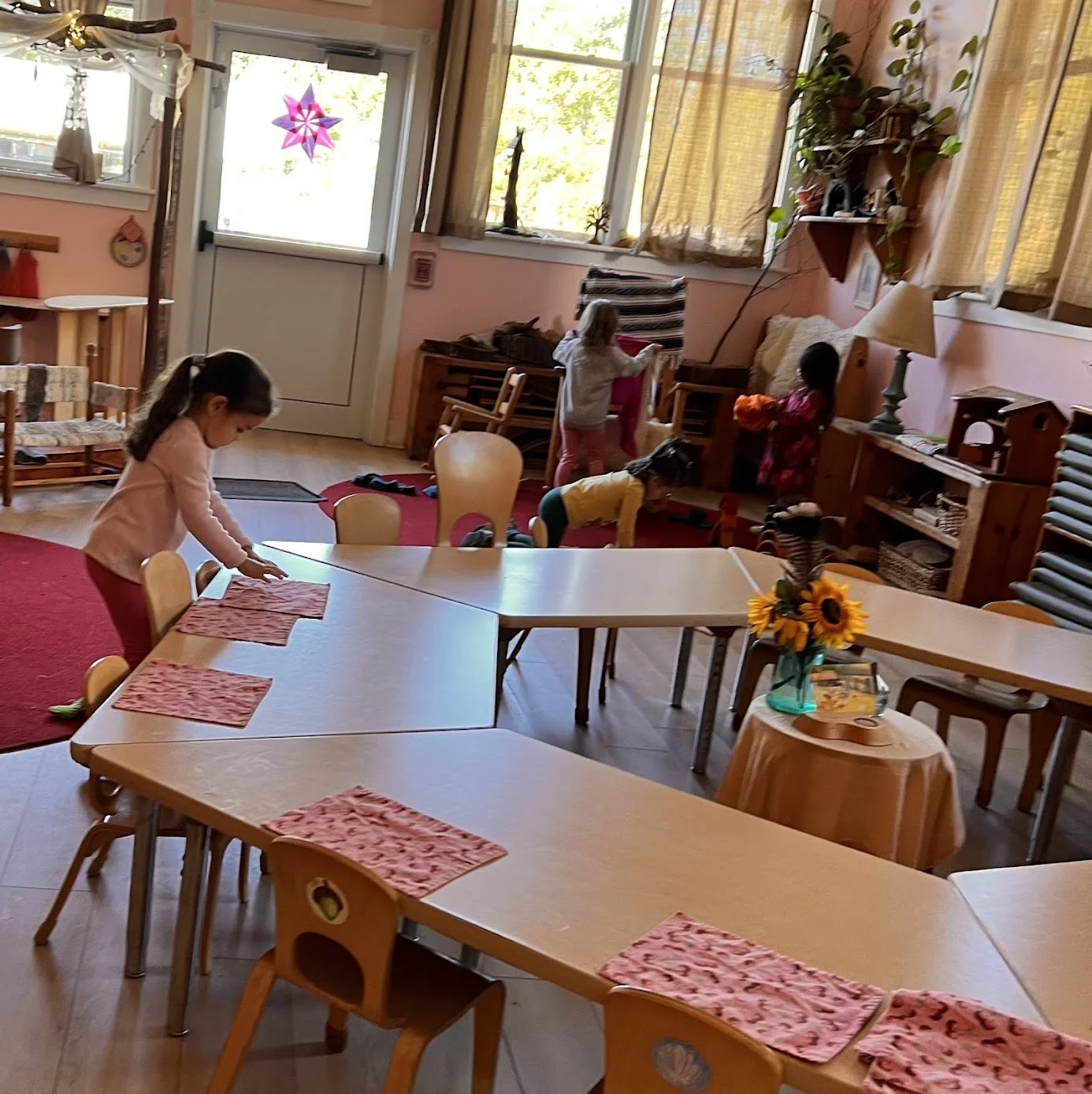
Setting the table gives children a chance to care for others and take pride in their growing independence.
Children help set the table with cloth napkins and placemats, real silverware, and ceramic cups and dishes. They learn where things belong and how to carry them carefully.
The setting makes an everyday meal feel worth taking time over. Teachers guide children as they serve food and pour water or tea. Children practice using utensils, passing dishes and noticing what others need.
Afterward, they clear their places and help put things away. Each child has a role, and the repeated routine helps them become more capable and independent.
Learning to Be Good Company
A shared meal gives children a daily opportunity to practice conversation. They tell stories and listen to classmates, with teachers helping everyone find a place in the exchange.
Manners grow through these ordinary moments. Children practice asking politely and waiting for a dish to reach them. Saying “thank you” becomes connected to someone’s actual help.
They also learn that being part of a group means making room for others. A meal offers many small chances to be considerate, whether that means pouring tea for a classmate, passing a cup to a friend, or helping someone clear a place setting.
Giving Thanks for Our Food
Before eating, children share a meal or snack thank you. ("Earth who gives to us this food / Sun who makes it ripe and good,
Dear Earth, Dear Sun, by you we live / Our loving thanks to you we give.") This brief pause expresses gratitude for the food and the people whose work brought it to the table.
Gardening and cooking give that gratitude something tangible to rest on. Children know that someone planted the seed and cared for the vegetables because they have done some of that work themselves.
Using washable napkins and durable cups, silverware and dishes carries the same sense of care into cleanup. The things we use each day deserve attention, too.
One Less Thing to Pack. So Much to Discover.
Parents looking for a nurturing preschool or kindergarten want to know their child will be well cared for throughout the day. At Seacoast Waldorf School, food is part of that care.
Children have time to enjoy a warm meal with familiar adults and friends. They contribute to classroom life and gain confidence in everyday tasks. Families get the reassurance of thoughtfully prepared food, along with a little time back each morning.
Looking for preschool or kindergarten in southern Maine or the New Hampshire Seacoast? Schedule a visit to Seacoast Waldorf School in Eliot and see our early childhood classrooms for yourself.
