
What Should Parents Look for in a Private Elementary School?
Click to download our interactive Parent Reflection Guide for prospective families of children in Grades 1-8.
Choosing an elementary school is about more than finding a place where your child will learn to read, write, and solve math problems. It's about finding an environment where your child feels known, challenged, supported, and excited to learn.
For families exploring private elementary schools near Portsmouth, New Hampshire, and throughout Southern Maine, the choices can feel overwhelming. Schools may share similar goals but take very different approaches to helping children grow.
As you explore your options, here are six important things to consider.
Will Teachers Truly Know Your Child?
One of the greatest advantages a private school may offer is the opportunity for more individualized attention.
But small class sizes alone don't tell the whole story. Consider how teachers get to know their students, recognize their strengths, and respond when a child needs additional support or a new challenge.
Questions to ask:
How large are the classes? How do teachers accommodate different learning styles and abilities? How do families and teachers communicate?
A child who feels understood is often more willing to ask questions, take healthy risks, and engage in learning.
Are Academics Both Strong and Engaging?
Academic excellence matters. Children need a solid foundation in reading, writing, mathematics, science, and the humanities.
Equally important is how those subjects are taught.
Look for a school where students do more than memorize information for a test. Are they encouraged to ask questions, solve problems, make connections, and apply what they've learned?
Hands-on projects, scientific observation, storytelling, artistic work, and real-world experiences can help children develop a deeper understanding of academic subjects.
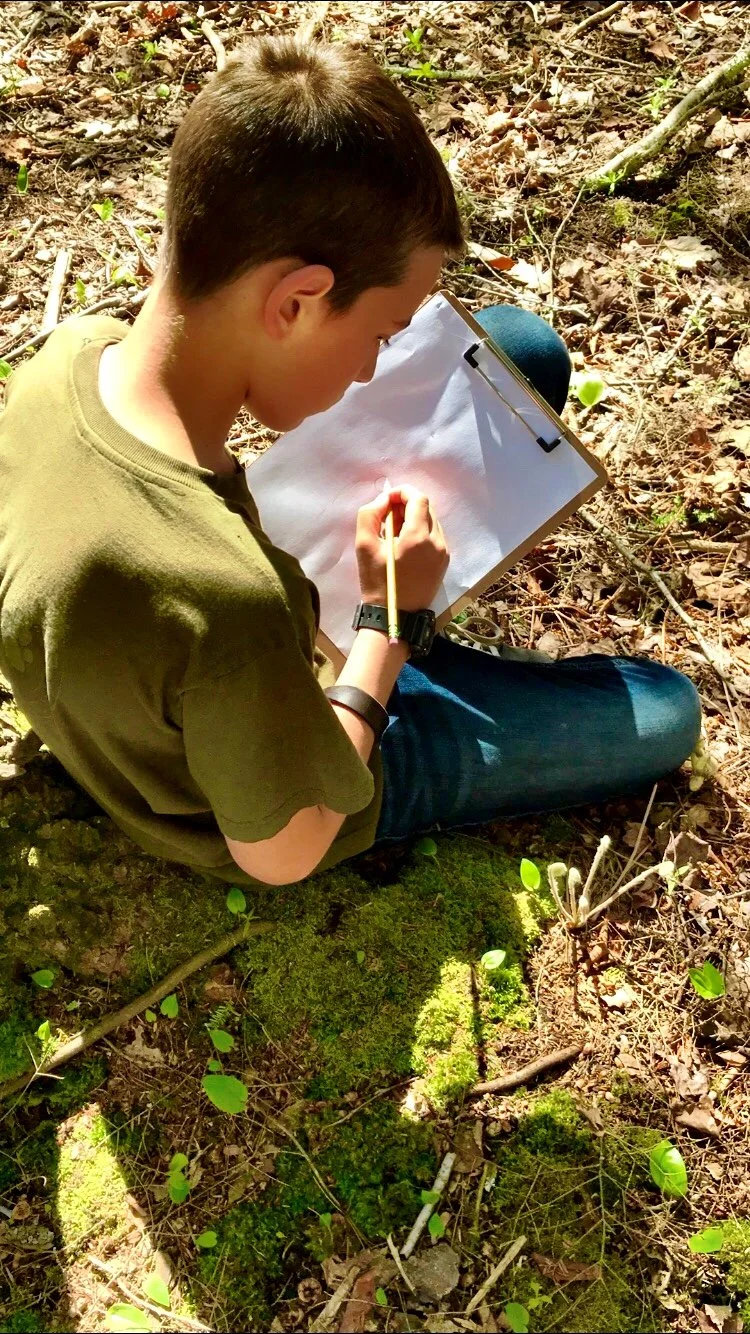
Seacoast Waldorf School 4th grader during Botany lesson
Questions to ask:
How is academic progress assessed? How much homework is there? What happens when a student struggles or moves ahead quickly? Can you show me examples of student work?
Is There Room for Creativity?
Creativity isn't limited to art class. It's part of learning how to approach challenges, consider different perspectives, and develop original ideas.
Music, drawing, painting, drama, handwork, and movement can complement traditional academics, giving children different ways to understand and express what they’re learning.
When touring a school, look beyond the classroom displays. Ask how creativity is incorporated into everyday lessons.
Questions to ask:
Are the arts taught as separate subjects, integrated into academics, or both? How often do students create something with their hands?
How Does the School Support Social and Emotional Growth?
Elementary school is where children begin to navigate increasingly complex friendships, disagreements, responsibilities, and expectations.
A strong school community helps children learn to communicate clearly, work cooperatively, resolve conflicts, and develop empathy.
Pay attention to how adults interact with students during your visit. Do children seem comfortable approaching their teachers? Are expectations clear? How does the school respond when a child is having a difficult day?
Questions to ask:
How does the school address bullying? How are conflicts handled? What opportunities do students have to develop responsibility and leadership?
What Does a Typical School Day Feel Like?
Children spend a significant portion of their childhood at school. The rhythm of that experience matters.
Consider the balance between focused academic work, movement, outdoor time, creative activities, and opportunities for social connection.
Some children thrive with frequent movement and hands-on experiences. Others benefit from predictable routines and quieter moments for reflection. Many need a combination of both.
During a tour, ask to see learning in action rather than relying solely on a description of the curriculum.
Questions to ask:
How much time do students spend outdoors? How is technology used? What opportunities exist for physical movement throughout the day?
Will This School Prepare Your Child for What Comes Next?
A good elementary education should build more than academic proficiency. It should help children become increasingly independent, confident, curious, and capable.
Ask how the school's approach evolves as students grow older. How are expectations raised? How do students learn to manage more complex work, organize their responsibilities, and think critically?
If the school continues into middle school, explore how that transition is handled. If students move elsewhere, ask how the school prepares them academically and socially.
Questions to ask:
Where do graduates typically go? How does the school evaluate readiness for the next stage of education?
Explore a Different Approach to Elementary Education
At Seacoast Waldorf School, our Grades 1–5 program combines strong academics with small classes, hands-on learning, artistic expression, and outdoor exploration.
Our Waldorf approach emphasizes meaningful relationships and an education that nurtures the whole child. Students develop academic skills alongside creativity, critical thinking, confidence, and a lasting curiosity about the world.
We welcome families from Portsmouth, Dover, Kittery, York, South Berwick, and surrounding Seacoast communities.
Curious about what this looks like in practice?
We invite you to visit Seacoast Waldorf School, explore our elementary classrooms, and discover whether our approach is the right fit for your child.
