
Inside the Rainbow Room: Helping Children Feel Ready to Learn
A child’s frustration sometimes shows up before they can explain it. Their feet keep moving under the desk. A small disagreement feels enormous. They know what an adult is asking, yet following through feels difficult.
At Seacoast Waldorf School, the Rainbow Room, situated in our main building, gives children a place to explore what is happening in those moments and practice skills thathelp them reflect and self-regulate.
The Rainbow Room is one part of Seacoast Waldorf School’s broader commitment to nurturing students’ social-emotional intelligence. By helping children recognize their needs, build self-regulation skills, and navigate challenging emotions with supportive adults, the Rainbow Room strengthens the foundation for healthy relationships, meaningful learning, and lifelong growth.
Through movement and support from a caring adult, children begin to recognize what their bodies are telling them and discover what helps.
What does it mean to regulate?
Regulation is the ability to manage our energy and emotions so we can respond to the situation around us. For a child, that might mean recovering from disappointment or finding enough focus to begin a lesson.
These abilities take time to develop. Sometimes children need an adult’s help before they can use a strategy independently.
In the Rainbow Room, we pay attention to each child’s needs. One child may benefit from vigorous movement. Another may need a comfortable place to pause before talking. We observe how they respond and adjust the support accordingly. The aim is to help children understand themselves and gradually use what they learn throughout the school day.
Learning to notice the early signs
Adults often recognize the physical signs of a difficult moment: a clenched jaw, tense shoulders, or a racing heart.
Children are still learning to make those connections. In the Rainbow Room, we might ask, “How does your body feel when you’re getting frustrated?” or “What do you notice just before you need to move?”
This awareness of signals inside the body is called interoception. For children, it can begin with something as simple as noticing butterflies in their stomach.
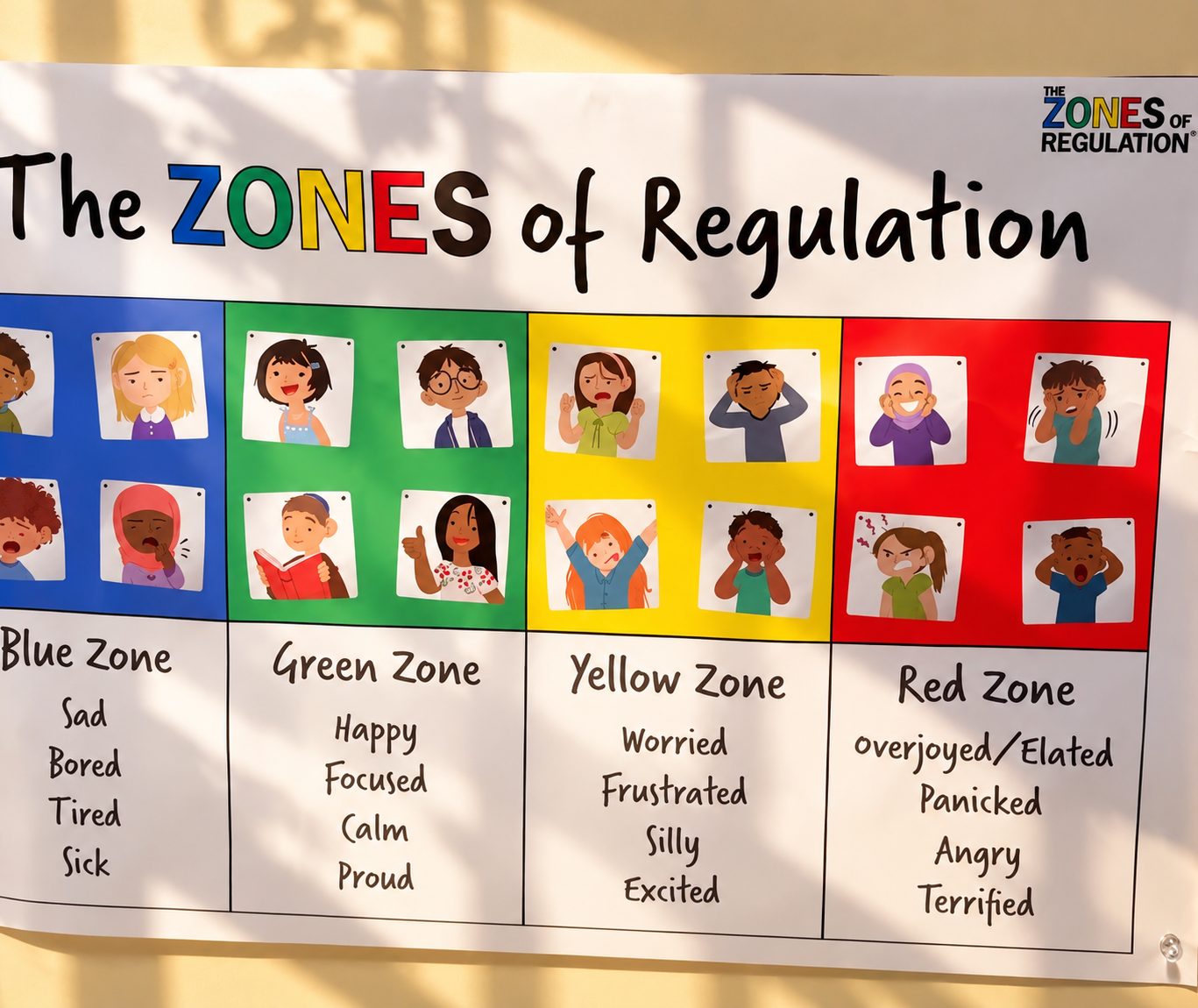
We also use the ‘Zones of Regulation’ to help children talk about feelings and energy levels. The zones provide a shared language without labeling emotions as good or bad. Feeling angry, excited, or tired is part of being human. Children need help understanding what to do with those feelings.
Over time, noticing an early signal may help a child ask for support before a challenge becomes overwhelming.
Why movement belongs here
A visit to the Rainbow Room can be active and playful. Children might pass a weighted ball back and forth, try bear crawls, or work their way through an obstacle course. A wobble board offers a chance to practice balance and adjust to a manageable challenge.
These activities give children concrete opportunities to practice coordination and pay attention to how their bodies feel. Some children find that muscular effort, such as pushing against a wall or carrying something with weight, helps them feel more organized.
We may ask, “Where is that energy trying to come out?” A child with restless legs might explore a movement sequence. Another might try blowing a ping-pong ball across the floor.
There is no single activity that works for everyone. We offer options and notice together whether something helps.
Making room for connection
Movement is only part of the experience. The Rainbow Room also has a cozy corner where a child can pause with support nearby.
Books offer another way into a conversation. Talking about a character’s frustration or friendship problem can feel easier than discussing a difficult personal experience right away. A story gives children room to consider how someone else feels and what might help.
Some children need this connection before they are ready to reflect. Others need movement first. We meet them where they are while keeping the next step in view: returning to classroom life.
Support and accountability belong together
Parents may wonder how this approach fits with boundaries.
At Seacoast Waldorf School, helping a child regulate goes alongside helping them take responsibility. When a child is overwhelmed, they may need support before they can meaningfully discuss what happened. Safety remains the immediate priority.
If a child hurts a classmate, adults attend to the children’s safety and needs. Once the child is ready, the work includes understanding the impact of their actions and finding an appropriate way to repair harm. They also practice a different response for the future.
We sometimes use the words “match” and “mismatch” to make expectations clear: “It’s okay to feel angry. Hitting is a mismatch with keeping our community safe.” This language allows us to hold a firm boundary while helping the child learn.
Carrying the learning back to class
Before a child leaves the Rainbow Room, we help them consider what they need next. They may recognize that a movement break helped or practice how to ask an adult for support.
Progress can look small: noticing frustration sooner, accepting help, or returning to a task after a difficult moment. Those experiences matter.
The Rainbow Room gives children a place to practice with a caring adult beside them. With time, they can begin to recognize their needs and bring those growing skills into everyday school life.
At Seacoast Waldorf School, we believe that emotional growth is an essential part of learning and development. Through supportive relationships, opportunities to build self-awareness and regulation skills, and a community that meets children with understanding and care, we help students develop the skills they need to navigate challenges, build healthy relationships, and grow with confidence.
Curious to learn more about how Seacoast supports students’ social-emotional development? We invite you to connect with us to learn more about the Rainbow Room and our school-wide approach to supporting the whole child. Book a 30-minute tour at a time that works for you.
